Connected

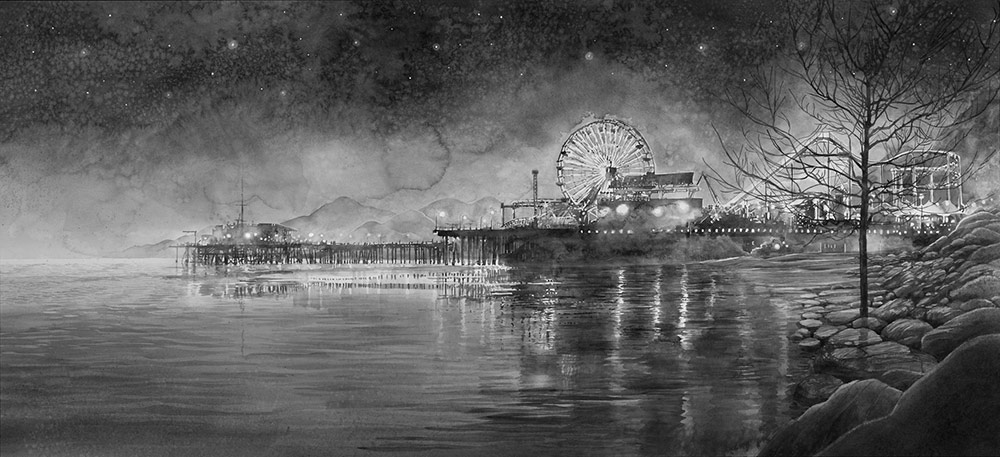
Pablo Gonzalez-Trejo, Connected, 79 x 220 inches, 200 x 560 cm, 2009, Charcoal and Graphite on Canvas

Pablo Gonzalez-Trejo, Connected, 79 x 220 inches, 200 x 560 cm, 2009, Charcoal and Graphite on Canvas

Join me for a defacing performance November 4th at 7:30 pm at Le 104CENTQUATRE as part of my ongoing Defacing Art Project.

Exhibition runs from November 4th to the 8th, 2009. Vernissage opening starts at 6:00 pm

Le 104CENTQUATRE
104 rue d’Aubervilliers / 5 rue Curial 75019 Paris
M : Stalingrad (ligne 2) , Crimée ou Riquet (ligne 7)
Vélib’: bornes rue d’Aubervilliers, rue Curial, rue Riquet

Pablo Gonzalez-Trejo, Marilyn Monroe, 77 x 51 inches, 195 x 130 cm, 2009, Charcoal and Graphite on Canvas

Pablo Gonzalez-Trejo, Marilyn Monroe, 77 x 51 inches, 195 x 130 cm, 2009, Charcoal and Graphite on Canvas

Pablo Gonzalez-Trejo, JFK, 77 x 51 inches, 195 x 130 cm, 2009, Charcoal and Graphite on Canvas

Pablo Gonzalez-Trejo, JFK, 77 x 51 inches, 195 x 130 cm, 2009, Charcoal and Graphite on Canvas

Pablo Gonzalez-Trejo, Bay of Pigs, 79 x 118 inches, 200 x 300 cm, 2009, Charcoal and Graphite on Canvas

Pablo Gonzalez-Trejo, Bay of Pigs, 79 x 118 inches, 200 x 300 cm, 2009, Charcoal and Graphite on Canvas

Stefano Arienti

Stefano Arienti, Marilyn, 1993

Stefano Arienti, Marilyn, 1993

In an article about Giò Marconi fabulous gallery space and artists, I read these lines on Stefano Arienti defacing a portrait of Marilyn Monroe with a eraser, it facinated me and I had to share it:

“A magnificent Marilyn poster is violated by Stefano Arienti’s eraser, defacing her features and leaving her monstrous.” Read article here

Pierre Bismuth

Pierre Bismuth

Pierre Bismuth

Pierre Bismuth does some defacing too:

“For his ongoing series, Following the right hand, Pierre Bismuth does just that. He projects a feature film onto a sheet of Plexiglas and painstakingly follows the movements of the lead actress’ right hand with a black marker. The resultant abstract drawings are then enframed over a 30 by 40 inch photographic print of a still image from the film. The image selected by the artist represents the moment that he disengages from the actress, sometimes near the beginning of the film, creating a simple drawing; but just as often near the end of the film, creating an aggressive thicket of marks that almost obliterate the filmic image. In this way, the motion picture is occluded by a chance pattern that constitutes a kind of messy signature made by the actress. There is an undeniably fetishistic aspect of this work, as a portion of its appeal is linked to the actress’s name and aura; at the same time, the focus on the squiggly marks paradoxically negates the film, along with its star, by obscuring them with black ink, frustrating our desire to connect with the screened image.”

Find out more here

Defacing Dictators

Defacing

Drawing my friends for the second defacing project was an interesting and enriching process where I tried to match my perception of their personality with their portrait and that was quite a reminiscent approach that in most cases brought me a smile. Drawing dictators is dangerous proposition… in my case… I fell empathy for these guys while I was drawing them, I felt under their charisma. I never thought this would be possible. Hence the need to preempt the Defacing process… here are some samples and a couple of studio pics:

DefacingDefacingDefacingDefacingDefacingDefacingDefacingDefacing

Annie Kevans

Annie Kevans, Boys Series, Francois Duvalier, 2004, Oil on paper, 50 x 40 cm

Annie Kevans, Boys Series, Francois Duvalier, 2004, Oil on paper, 50 x 40 cm

While researching the images to use in upcoming exhibition Not Welcome from my Defacing Art Project, I found this artist that imagines portraits of dictators as boys. I found this approach to representation of power and sociopolitical systems very interesting:

“My paintings reflect my interests in power, manipulation and the role of the individual in inherited belief systems. It is important for me to examine the duality of truth and falsehood throughout my work, which I do by creating ‘portraits’ which may or may not be based on real documentation.

The series ‘Boys’, in which dictators were depicted as children, looked at purity and corruption and, in particular, the notion of the ‘Innocent Child’. The series ‘Girls’ looked at the continuing media-led sexualisation of childhood and raised questions about our collusion in the deification and commodification of female child stars, from Shirley Temple to Britney Spears. Whereas the boys had to make a name for themselves as Pol Pot or Hitler, the girls were found, sought out, and their image given to them. The process of self invention, innocence and culpability touches both series differently.”

Find out more here